


Psoriasis is characterized by periods of remission and exacerbations.Inflammation of the skin occurs in several stages: initial, progressive, stationary, regressive.Such a division will help in diagnosis and proper therapy.
Interesting to know
Psoriasis is a genetic disease.About 10% of the population has characteristic DNA abnormalities, and only 2% of them show signs of a disorder in the functioning of the skin.
The appearance of pathology is provoked by the following factors:
- severe emotional stress;
- injuries;
- alcohol abuse, smoking;
- unbalanced diet;
- infectious and other diseases;
- certain drugs;
- endocrine diseases;
- predisposition to allergies;
Due to an incorrect response of the immune system, which reacts to epidermal tissue as if it were foreign elements, the first signs of the disease appear.Let's look at the stages of psoriasis, its symptoms and treatment regimens.
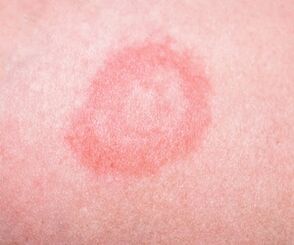
Initial stage of psoriasis
The first sign isthe appearance of a pimple(papules).The shape is round, the color is reddish or pink.On the lower extremities, due to slow blood flow, manifestations of a bluish tint may occur.Papular formations are small, the size of a pinhead.
The early stage is characterizedmany papules, which have clearly defined boundaries.Whitish scales also appear.They are easily separated from the surface when touched.Papules can merge into one, forming larger elements.
During remission at an early stage, the rashes turn pale.The affected areas of the skin become partially discolored.In children, this stage of psoriasis is often confused with manifestations of allergies or diathesis.The rash may be accompanied by severe itching.Signs that can help diagnose psoriasis:
- when scraped, the surface of the plaque becomes whitish, resembles a crushed drop of stearin, the scales peel off;
- if you continue to scrape the stain and remove the scales, a shiny red surface will appear;
- When scraped, small drops of blood appear.
Progressive stage of psoriasis
During the progressive stage of psoriasis, the following symptoms appear:
- The papules turn red and continue to be covered with white scales.They peel off easily, revealing a smooth layer of reddened skin underneath.When damaged, blood appears.
- During exacerbation, the papular elements grow and merge.They are clearly different from healthy areas of skin.
- The itching intensifies.But it goes away when the process enters the stationary phase.Painful and obsessive itching interferes with sleep and daily activities.If you simply scratch the cover, injuries and new plaques will appear.The appearance of new plaques at the site of injury is Koebner syndrome.The number of itchy manifestations increases gradually, covering the torso, limbs, and head.
- There are no scales at the edges of the plaques; they are hyperemic, which indicates the continuation of the inflammatory process.
Consequences
Psoriasis can have negative effects on the joints (psoriatic arthritis).Then severe joint pain and deformation occur if the process is left untreated.
Stationary stage of psoriasis
The main feature of the stationary stage of psoriasis is that new elements stop appearing.Positive changes come through proper treatment.
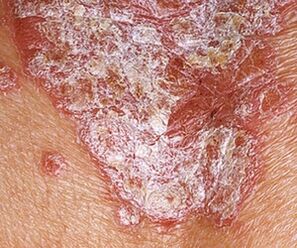
Clinical manifestations:
- itching disappears;
- there are no injuries (Koebner's symptom goes away);
- peeling may increase.
All spots stop developing.If during the progressive stage the plaques had a border without scales, then during the stationary stage the entire inflamed surface of the skin will peel off and take on a characteristic psoriatic appearance.
Scales are characteristic of the last stage of inflammation.At the beginning of the development of pathology, the scales do not keep pace with the progressive growth of plaques and cannot cover them completely.In half of the cases it appearspseudoatrophic corolla.
Pseudoatrophic corolla
It looks like a light rim around the element, which has a structure reminiscent of rough tissue paper, consisting of a stratum corneum and not exceeding two millimeters in width.
Regressive stage of psoriasis
With the regressive stage of psoriasis, the psoriatic cycle ends.Characteristic features:
- the exacerbation process stops, inflammation goes away;
- plaques gradually resolve;
- peeling stops, the elements of the rash become flattened;
- the rashes become pale pink and gradually discolor;
- papules may still remain on the arms and elbows.
There is no scarring or atrophy of the affected areas.Temporary hyperpigmentation or areas that lack pigment may occur at the site of the rash.
Remission occurs after complex therapy.The period of relief varies from person to person..The disease can last for several months or even years in a latent form.Exacerbations occur more often in winter, with the only exceptions being a few forms of psoriasis.
Treatment of psoriasis at different stages
Therapy for any form of psoriasis consists of general and local treatment, physiotherapeutic methods, and dietary adjustments.At an early stage of therapy it is necessary:
- give up bad habits;
- strictly follow a therapeutic diet;
- use ointments that contain vitamin A, D3, hormones;
- use systemic and sedative medications;
- undergo ultraviolet therapy.
If the plaques are located on the head, the doctor prescribes shampoos based on tar, zinc, and selenium sulfide.
All products must be used as prescribed by a doctor.Long-term use of drugs (especially with tar) can cause skin irritation.Products should be changed every 7 days.
Treatment of psoriasis at an early stage
The effectiveness of therapeutic measures at an early stage depends on when the patient came to the doctor and began treatment.
Early therapy in most cases helps prevent the disease from becoming chronic.
Experts recommend using salicylic acid ointment.This is an anti-inflammatory and antimicrobial drug that has a beneficial effect on affected skin areas.Using the keratolytic effect, the ointment will clear the plaque of keratinized parts of the integument.Mothball ointment will help relieve itching.
The following drugs are usually prescribed:
- based on tar;
- based on solid oil;
- petroleum based.
Not long ago, drops and oil for psoriasis appeared.The product can soothe the skin, moisturize it, prevent the skin from drying out, and relieve puffiness.The drug contains ubiquinone, beta-carotene, beaver fat, propolis, pumpkin oil and other components, with the help of which the number of plaques decreases, there are fewer of them, and the skin is better moisturized.It is recommended to use it in combination with other medications and after consulting a specialist.
Treatment of psoriasis at a progressive stage
Therapy must be comprehensive and careful.The clinical picture is quite severe; treatment should be trusted only to specialists.Patients are helped by intravenous and intramuscular administration of special drugs.Sorbents help remove toxins from the body.
Manifestations are relieved by ointment with salicylic acid and softening emulsions.They moisturize and eliminate inflammation.During an exacerbation, you should not use drugs containing tar or other irritating components.
Physiotherapeutic procedures (PUVA therapy, ultraviolet irradiation, paraffin baths) are best carried out during the period of reducing inflammation.Corticosteroids and cytostatics are prescribed only when the processes are particularly complex.
Prescribe antihistamines (reduce the development of an allergic reaction), sedatives (calming), anti-inflammatory, keratolytics (softening), diuretics (relieve swelling, remove toxins).
Treatment of psoriasis at the stationary stage
The patient needs a slight adjustment of therapy.Shampoos with tar, emulsions with oil, and calcipotriol are usually prescribed.Systemic therapy is used when the disease affects large areas of the skin.Ultraviolet irradiation and PUVA techniques are widely used.
If there is no effect, some cytostatic agents are prescribed.In severe cases, the patient is prescribed an immunosuppressant, a cytotastic.
Treatment of psoriasis at a regressive stage
Therapy at the last stage of psoriasis must be comprehensive and adjusted by a specialist.Therapy is gradually being canceled and replaced by preventive measures.Treatment at all stages is carried out carefully; under no circumstances should the rash be damaged.
Of particular importance is adherence to a strict diet and lifestyle correction.Stress can be a powerful provoking factor, significantly aggravating the condition at the onset of the disease.
In combination with drug therapy, rashes on the hands can be treated with baths with sea salt or by mixing baby cream with string powder and lubricating the plaques with this mixture.
Additional therapies
A patient with psoriasis has a deficiency of vitamins, which affect the regulation of metabolic processes and have a blood purifying, sedative, and restorative effect.
The vitamin complex should contain B vitamins, ascorbic acid, vitamin A, folic acid and others.They are prescribed orally, intramuscularly, and also in droppers.
Dividing pathology into various stages is a conditional measure that helps specialists correctly identify one or another stage, facilitates diagnosis and treatment.It is impossible to completely get rid of psoriasis, but if all the rules of complex treatment are followed, with systematic preventive measures, the disease can proceed hidden for a long time and not prevent a person from living a full life.